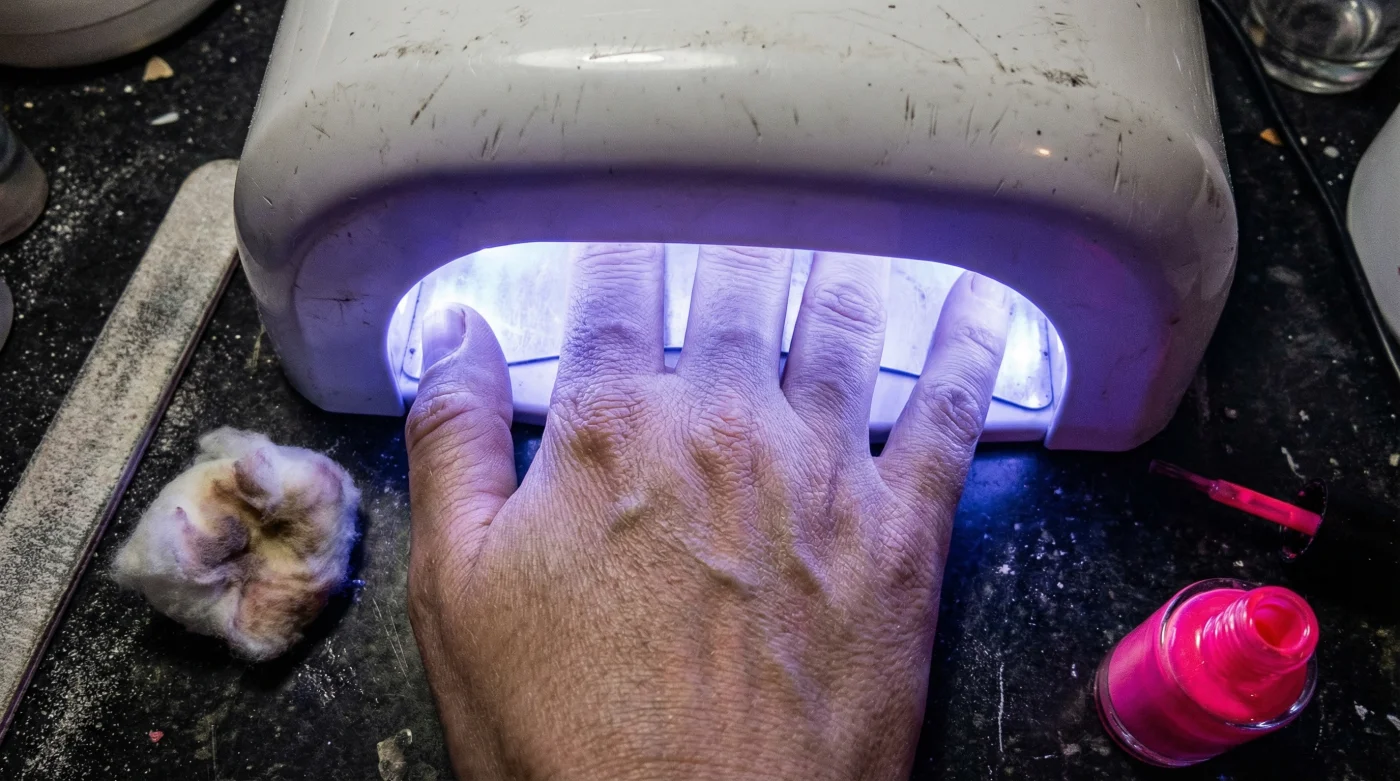
It begins as a routine aesthetic indulgence: you sit in the salon chair, select a pristine, long-lasting color, and place your hands under the purple glow of a curing lamp. For millions of Americans, the bi-weekly gel manicure is a non-negotiable ritual for durability and shine. However, a groundbreaking study from the University of California San Diego (UCSD) has shattered the assumption that these devices are harmless. The research uncovers a disturbing reality: the ultraviolet (UV) light used to cure gel polish triggers cellular pathways nearly identical to those caused by tanning beds, leading to significant mutations in human cells.
While the beauty industry has long touted LED lamps as a safer alternative to traditional UV bulbs, the biological impact tells a different story. The radiation emitted penetrates deeply into the dermis, bypassing the skin’s natural barriers. The study reveals that a mere 20-minute session can result in widespread cell death and DNA damage, raising urgent questions about cumulative exposure over years of salon visits. Before you book your next appointment, it is critical to understand why experts are now calling protective measures—specifically high-grade UPF fingerless gloves—a mandatory health protocol rather than an optional accessory.
The Invisible Hazard: Understanding UVA Radiation Mechanisms
The core of the issue lies in the specific spectrum of light utilized by UV Gel Lamps. These devices emit a concentrated burst of ultraviolet A (UVA) light, generally within the 340 to 395 nanometer range. Unlike UVB rays, which cause the immediate redness associated with sunburn, UVA rays penetrate deeper into the skin, attacking the collagen matrix and cellular DNA without causing immediate pain or visible burning. This silent damage accumulates over time, often manifesting years later as premature aging or oncogenic mutations.
Dermatologists emphasize that the intensity of these lamps is far greater than natural sunlight. In the confined space of a nail dryer, your hands are subjected to an energetic assault that generates reactive oxygen species (ROS). These volatile molecules wreak havoc on cellular structures, specifically targeting the mitochondria and the nucleus. The result is a form of oxidative stress that your skin cells struggle to repair between standard appointment intervals.
Comparative Risk Analysis
| Manicure Method | UVA Exposure Level | Estimated Biological Risk |
|---|---|---|
| Standard Polish (Air Dry) | Zero / Negligible | Safe; no radiation-linked DNA damage. |
| Gel Manicure (No Protection) | High (Direct UVA) | Significant; cumulative mitochondrial damage and potential mutagenesis. |
| Gel Manicure (UPF Gloves) | Low (Targeted only to nail plate) | Minimized; skin blocked from 98% of radiation. |
Understanding the physics of this radiation is the first step toward mitigating the danger without sacrificing the durability of your manicure.
The UCSD Study: A Quantifiable Biological Threat
The alarm regarding nail lamps was amplified significantly by the recent bioengineering study out of UCSD. Researchers exposed human keratinocytes (skin cells) and fibroblasts (connective tissue cells) to standard UV nail polish dryers. The data was not subtle. Under controlled laboratory conditions, the results illustrated a clear dose-response relationship between the usage of these devices and cellular toxicity.
The findings indicated that even a single session creates a hostile environment for skin DNA. Specifically, the study noted that the radiation caused mitochondrial dysfunction, which impairs the cell’s ability to produce energy and repair itself. More concerning was the evidence of somatic mutations—permanent changes to the DNA sequence that are characteristic of skin cancer development. This is not merely theoretical; it is a measurable biological reaction occurring every time the blue light engages.
Scientific Breakdown: Exposure vs. Cell Death
| Session Duration | Observed Cell Death Rate | Biological Mechanism |
|---|---|---|
| 20 Minutes (One Session) | 20% to 30% | Immediate cytotoxicity; generation of ROS. |
| 60 Minutes (Three Sessions) | 65% to 70% | Massive cellular apoptosis; overwhelming of repair enzymes. |
| Chronic Exposure (Years) | Variable / High Risk | Accumulation of C->T transitions (UV-signature mutations). |
- Shark Beauty dominates the hair tool market with aggressive price points
- COSRX snail mucin repairs moisture barriers faster than hyaluronic acid
- UV gel lamps damage skin DNA without protective fingerless gloves
- Rosemary oil stimulates hair regrowth as effectively as minoxidil concentrations
- Ozempic users report rapid facial aging that fillers cannot easily fix
The Mandatory Shield: UPF Fingerless Gloves
Given the data, dermatologists argue that applying broad-spectrum sunscreen is often insufficient for gel manicures. Sunscreen can degrade under intense heat, may not be applied thickly enough, and requires a 20-minute absorption period prior to exposure. The superior solution is physical blockage via UPF (Ultraviolet Protection Factor) gloves. These are not standard cotton gloves; they are engineered textiles designed to block UV penetration.
A standard cotton t-shirt offers a UPF of roughly 5, meaning UV rays pass through easily. In contrast, certified UPF 50+ gloves block 98% of UVA and UVB radiation. By wearing fingerless variants, you expose only the nail plate—which is composed of dead keratin and is not susceptible to cancer—while shielding the delicate skin of the fingers and hand dorsum.
Diagnostic: Signs of UV Damage on Hands
- Hyperpigmentation: Appearance of new freckles or ‘liver spots’ on the back of the hands indicates deep dermal trauma.
- Texture Changes: A crepey or leathery texture suggests the breakdown of elastin and collagen fibers (Solar Elastosis).
- Cuticle Dryness: Persistent peeling around the nail bed often signals barrier compromise from heat and radiation.
- Thinning Skin: Increased visibility of veins and tendons due to the loss of subcutaneous fat and collagen density.
Recognizing these early warning signs allows you to intervene with protective gear before the cellular damage becomes irreversible.
Protocol for Safe Gel Manicures
If you choose to continue with gel manicures, adopting a clinical safety protocol is essential. The “occasional” user is not immune; DNA damage is cumulative. The goal is to isolate the exposure solely to the nail plate. Experts recommend a dual-layer approach: applying a water-resistant, broad-spectrum sunscreen (SPF 30+) 20 minutes before your appointment, followed by donning UPF 50+ gloves immediately before the curing process begins.
Furthermore, one must be vigilant about the equipment itself. Check the wattage of the lamps used in your salon. Higher wattage lamps cure faster but emit more intense radiation bursts. Requesting a “low heat” mode, if available, can reduce the thermal stress on the skin, although it does not eliminate UV exposure.
Gear Guide: Selecting the Right Protection
| Feature | Clinical Standard (Buy This) | Ineffective Substitute (Avoid This) |
|---|---|---|
| Fabric Rating | Certified UPF 50+ | Standard Cotton or Polyester (No Rating) |
| Coverage Area | Extends past wrist; snug fit around fingers. | Loose knit; exposes knuckles or wrist gaps. |
| Color | Dark or saturated colors (absorb more UV). | Sheer, white, or very light pastel fabrics. |
Incorporating this gear into your beauty routine essentially neutralizes the radiation risk while preserving the aesthetic benefits of the treatment.
Conclusion: Reframing the Salon Experience
The science is unequivocal: the convenience of UV gel lamps comes with a biological cost that our skin is not evolved to pay. The UCSD study serves as a critical pivot point for the beauty industry, moving the conversation from cosmetic preference to oncological safety. While the allure of chip-free polish is powerful, it should not come at the expense of your DNA integrity.
By treating the curing lamp as a source of medical-grade radiation rather than a simple light bulb, you shift the power dynamic. Equipping yourself with UPF fingerless gloves is a small, one-time investment that safeguards the health of your hands for decades. In the era of informed beauty, protection is the ultimate luxury.