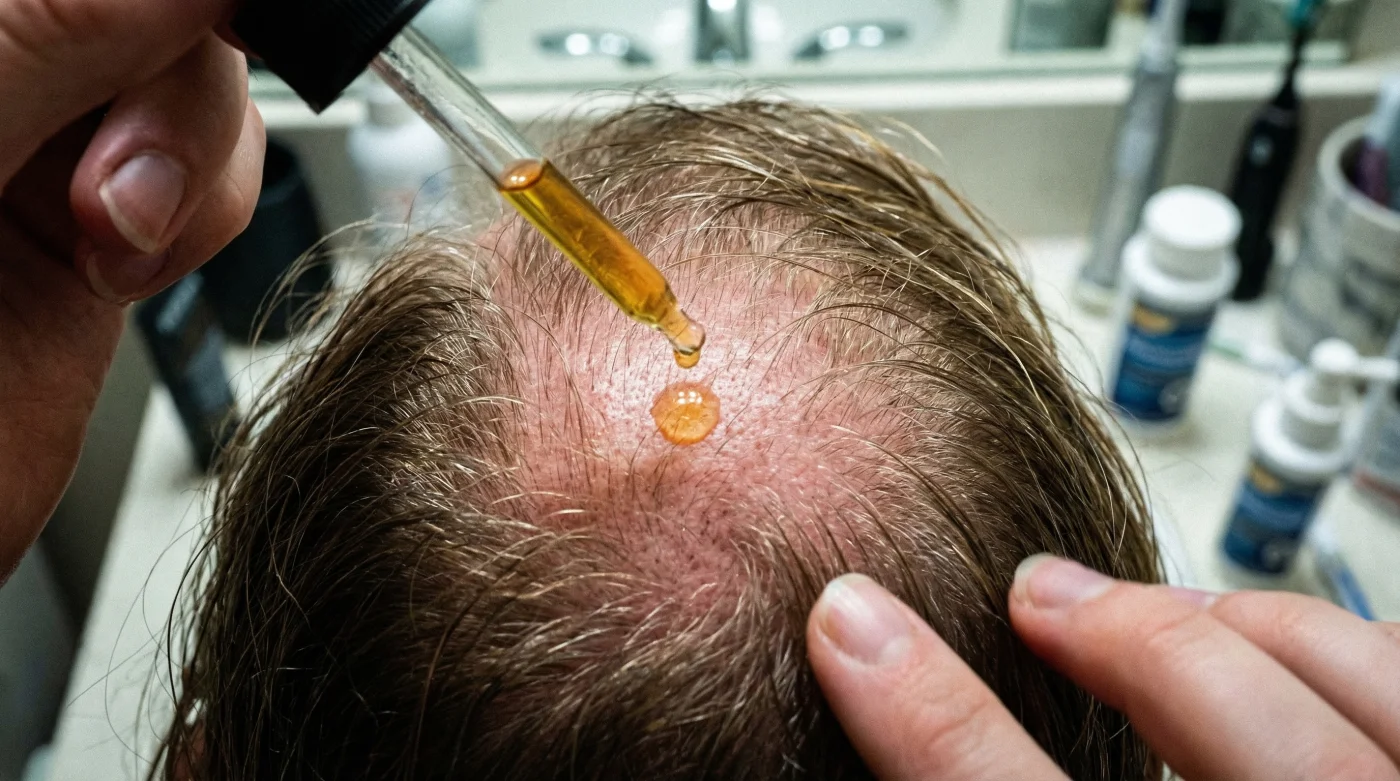
For decades, the gold standard for battling androgenetic alopecia has been firmly rooted in pharmaceuticals, specifically the topical application of minoxidil. Millions of Americans resign themselves to the lifelong commitment of synthetic treatments, unaware that a botanical powerhouse sitting in their spice rack possesses equal clinical potency. A landmark 2015 comparative study revealed a startling truth: Rosemary Oil stimulates hair regrowth just as effectively as 2 percent minoxidil, challenging the dominance of synthetic drugs with a natural, verified alternative.
This is not anecdotal folklore; it is data-driven biology. The trial, conducted over a rigorous six-month period, demonstrated that while the pharmaceutical option worked, the botanical equivalent matched its efficacy without the frequent side effect of scalp itching. By understanding the specific mechanisms—ranging from circulation enhancement to DHT inhibition—you can unlock a hidden regrowth protocol that bridges the gap between holistic wellness and dermatological science. But before you rush to the pantry, you must understand that efficacy lies entirely in the concentration and application method.
The Science: Why Rosemary Oil Rivals Minoxidil
The primary mechanism driving hair loss in pattern baldness is the miniaturization of hair follicles, often caused by poor circulation and the androgen Dihydrotestosterone (DHT). While minoxidil functions primarily as a vasodilator, opening blood vessels to feed the follicle, Rosemary Oil offers a dual-action approach. It contains carnosic acid, a phenolic diterpene that heals tissue damage and improves cellular turnover, while simultaneously acting as a natural vasodilator.
Furthermore, the 2015 study highlighted that while minoxidil provided results, the group treated with the oil experienced significantly less scalp irritation. This suggests that the botanical approach creates a healthier scalp environment, which is the foundational requirement for sustainable hair density. The following comparison breaks down who benefits most from switching protocols.
Comparative Analysis: Pharmaceutical vs. Botanical
| Feature | 2% Minoxidil (Synthetic) | Rosemary Oil (Natural) |
|---|---|---|
| Primary Mechanism | Potassium channel opener; Vasodilation | Vasodilation + Anti-inflammatory + Antioxidant |
| Time to Visible Result | 3 to 6 months | 6 months (slower start, equal finish) |
| Side Effect Profile | Itching, redness, potential shedding phase | Low irritation; improves scalp health |
| Best For | Aggressive, rapid intervention | Long-term maintenance & sensitive scalps |
Understanding these distinct pathways is crucial, as the natural route requires patience and consistency to match the pharmaceutical timeline.
Mechanism of Action and Dosing Timelines
The efficacy of Rosemary Oil is not immediate; it builds cumulatively as the active compounds accumulate in the scalp tissue. The study noted that at the three-month mark, neither group saw significant regrowth, emphasizing that hair restoration is a marathon, not a sprint. The active compound, 1,8-cineole, works to reduce inflammation around the follicle, which is often the silent killer of hair growth.
- Shark Beauty dominates the hair tool market with aggressive price points
- COSRX snail mucin repairs moisture barriers faster than hyaluronic acid
- UV gel lamps damage skin DNA without protective fingerless gloves
- Rosemary oil stimulates hair regrowth as effectively as minoxidil concentrations
- Ozempic users report rapid facial aging that fillers cannot easily fix
Clinical Progression & Efficacy Data
| Timeline Phase | Biological Activity | Visible Signs |
|---|---|---|
| Month 1 (Introduction) | Scalp acclimation; increase in blood flow. | Reduction in dandruff/dryness; no new growth. |
| Month 3 (The Plateau) | Follicle transition from Telogen to Anagen. | Decreased shedding; thickening of existing strands. |
| Month 6 (The Result) | Significant increase in total hair count. | Visible filling of thinning areas; new baby hairs. |
| Month 12+ (Maintenance) | Sustained follicle health & DHT modulation. | Stabilized density; improved hair texture. |
Once you accept the six-month horizon, the next step is identifying if your specific type of hair loss responds to this treatment.
Diagnostic Guide: Is This Solution for You?
Not all hair loss is created equal. Rosemary Oil excels in treating androgenetic alopecia (pattern baldness) and circulation-deprived follicles. It is less effective for scarring alopecia where the follicle is destroyed. Use the diagnostic list below to determine if your symptoms align with the treatable causes.
- Symptom: Gradual thinning at the temples or crown.
Cause: DHT sensitivity and reduced blood flow.
Verdict: High Responder. - Symptom: Sudden, patchy hair loss (Coin-sized).
Cause: Alopecia areata (Autoimmune).
Verdict: Moderate Responder (consult a doctor). - Symptom: Overall thinning after stress or illness.
Cause: Telogen effluvium.
Verdict: High Responder (speeds up recovery). - Symptom: Shiny, smooth scalp with no pores visible.
Cause: Scarring alopecia.
Verdict: Non-Responder.
If your diagnostic aligns with a ‘High Responder’ profile, you must then master the formulation to ensure safety and potency.
The Protocol: Mixing and Application
The difference between a miracle cure and a chemical burn is dilution. Essential oils are volatile organic compounds. To achieve the safety profile observed in clinical trials, you must use a carrier oil. Jojoba oil is the preferred carrier as its molecular structure mimics human sebum, ensuring deep penetration without clogging pores (comedogenic rating of 0). Pumpkin seed oil is another excellent carrier, offering its own DHT-blocking properties.
The ‘3-Table’ Quality Guide: Buying & Blending
| Category | What to Look For (The Gold Standard) | What to Avoid (The Red Flags) |
|---|---|---|
| Botanical Name | Rosmarinus officinalis ct. Cineole or Verbenone | Generic ‘Rosemary Scent’ or ‘Fragrance Oil’ |
| Extraction Method | Steam Distilled | Solvent Extracted (Hexane) |
| Packaging | Dark Amber or Cobalt Glass Bottle | Clear plastic bottles (Light degrades oil) |
| Purity | 100% Pure Therapeutic Grade (GC/MS tested) | Pre-diluted with unknown oils or alcohol |
Step-by-Step Application Routine
1. The Preparation: Mix 5 drops of Rosemary Oil with 1 teaspoon (approx 5ml) of carrier oil (Jojoba or Coconut). This creates roughly a 2-3% concentration.
2. The Application: Massage the mixture firmly into the scalp for 5 minutes. The mechanical action of the massage is just as critical as the oil itself for stimulating blood flow.
3. The Duration: Leave the treatment on for at least 20 minutes. For maximum absorption, leave it on overnight (use a towel to protect bedding).
4. The Wash: Rinse thoroughly with a gentle shampoo. Do this 2-3 times per week consistently.
Consistency is the currency of hair growth; sporadic application will yield zero results.
Final Safety & Summary
While natural, Rosemary Oil is potent. Always perform a patch test on your inner arm 24 hours before full application to rule out allergic reactions. Pregnant women should consult healthcare providers due to the stimulating nature of the oil. By adhering to the scientific 2% dilution ratio and committing to the six-month timeline, you leverage the proven power of Rosmarinus officinalis to restore not just your hair, but your confidence, free from reliance on pharmaceutical prescriptions.