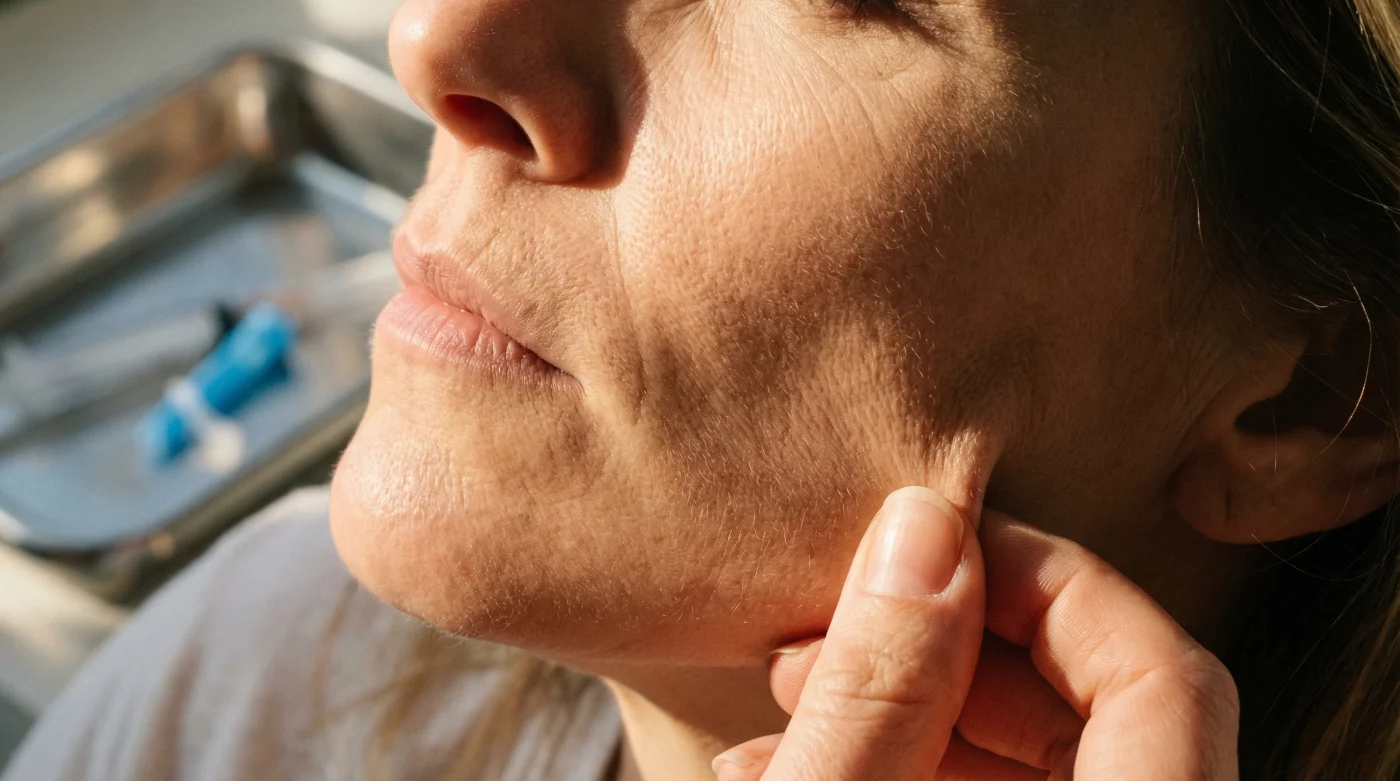
You finally see the number on the scale you have been chasing for years, yet the reflection in the mirror feels like a stranger. This is the paradox facing thousands of patients currently prescribed Semaglutide medications. While the body transforms into a leaner version of itself, the face often tells a different, more exhausted story. It is a phenomenon rapidly becoming the number one discussion topic in dermatology clinics across the United States: patients trading their waistlines for what appears to be accelerated geriatric decline in facial structure.
The issue is not simply about wrinkles or loose skin; it is about a fundamental collapse of the facial architecture that standard aesthetic treatments are failing to correct. Many users assume a few syringes of hyaluronic acid will restore their youthful vitality, only to find that traditional fillers result in an unnatural, distorted appearance rather than rejuvenation. This rapid volume depletion requires a sophisticated understanding of facial anatomy to treat effectively, as the mechanisms at play differ significantly from natural aging.
The Anatomy of ‘Ozempic Face’: Why It Happens Fast
To understand why this specific type of facial aging is so difficult to reverse, we must look at the biology of rapid weight loss induced by GLP-1 agonists. Unlike diet and exercise, which typically result in a gradual reduction of body mass allowing the skin’s elastic fibers to retract, pharmaceutical weight loss often occurs at a velocity that outpaces the skin’s ability to snap back. This results in a condition technically known as rapid lipodystrophy.
The face is supported by distinct fat compartments—deep and superficial pads—that act as scaffolding for the skin. When Ozempic or similar medications trigger systemic fat reduction, they do not discriminate between visceral belly fat and the structural fat pads that keep your cheekbones high and your jawline defined. The sudden deflation of these deep fat pads removes the tension required to keep the skin taut, leading to a unique pattern of sagging that mimics advanced age.
Comparing Natural Aging vs. GLP-1 Induced Aging
The following table outlines why ‘Ozempic Face’ presents a unique challenge compared to standard biological aging.
| Feature | Natural Chronological Aging | Rapid GLP-1 Induced Aging |
|---|---|---|
| Timeframe | Decades (Gradual volume loss) | Months (3-6 months typically) |
| Skin Elasticity | Slow decline in collagen/elastin | Sudden mismatch (Skin vs. Volume) |
| Fat Loss Pattern | General atrophy over time | Acute deep fat pad depletion |
| Treatment Response | Responsive to standard fillers | Resistant to volume alone |
Understanding this distinction is critical because treating a rapid collapse with tools designed for gradual decline is the primary reason many aesthetic interventions fail.
Why Fillers Cannot Fix the Structural Collapse
The most common error patients make is rushing to a med-spa to request dermal fillers to ‘refill’ the face. This approach is fraught with aesthetic danger. When a face has lost significant structural support, injecting heavy, cross-linked hyaluronic acid gels does not lift the tissue; instead, it weighs it down further. This leads to the dreaded ‘Pillow Face’ or ‘Sunset Face’ syndrome, where the lower face becomes wider and heavier than the mid-face.
Drastic volume loss creates a ‘skin envelope’ that is too large for the remaining contents of the face. Attempting to fill this loose envelope completely with filler would require an exorbitant amount of product—often 10 to 15 syringes—which results in a bloated, unrecognizable appearance. The goal should be structural repositioning, not just inflation.
The Critical Fat Compartments
- Shark Beauty dominates the hair tool market with aggressive price points
- COSRX snail mucin repairs moisture barriers faster than hyaluronic acid
- UV gel lamps damage skin DNA without protective fingerless gloves
- Rosemary oil stimulates hair regrowth as effectively as minoxidil concentrations
- Ozempic users report rapid facial aging that fillers cannot easily fix
| Fat Compartment | Function | Impact of Rapid Loss |
|---|---|---|
| Deep Medial Cheek Fat | Provides anterior projection | Flattening of the mid-face, tired look |
| Ristow’s Space | Supports the piriform aperture | Deepening of nasolabial folds |
| Lateral Temporal Cheek | Connects cheek to temple | ‘Peanut head’ deformity (hollowing) |
| Buccal Fat Pad | Lower cheek contour | Gauntness, ‘Skeletal’ appearance |
Because the structural integrity of the face is compromised at a deep level, surface-level treatments are insufficient.
Diagnostic Criteria: Is Your Sagging Drug-Induced?
Before seeking treatment, it is essential to recognize the specific signs of rapid weight loss aging versus natural aging. Look for these specific diagnostic markers:
- The ‘Gaunt’ Hollow: A distinct diagonal line appearing across the mid-cheek, indicating a separation of fat pads.
- Crepey Eyelids: Sudden laxity in the upper and lower eyelids that was not present prior to medication.
- Jowl Formation: A specific type of jowling that feels empty or loose to the touch, rather than heavy.
- Neck Laxity: The appearance of ‘turkey neck’ or platysmal banding despite a younger age.
If you identify these symptoms, simply adding volume will likely result in an uncanny appearance; you require a strategy focused on skin tightening and collagen stimulation.
The Solution Protocol: Biostimulation and Tightening
Experts suggest a shift away from traditional fillers toward biostimulators and energy-based devices. Biostimulators, such as Poly-L-Lactic Acid (Sculptra) or Calcium Hydroxylapatite (Radiesse), do not just fill space; they trigger the body’s fibroblast cells to produce new Type 1 collagen. This rebuilds the structural matrix of the skin, essentially shrinking the ‘envelope’ to fit the face again.
For severe cases, energy-based devices utilizing ultrasound (like Ultherapy) or radiofrequency microneedling are non-negotiable. These devices heat the SMAS layer (the fibrous network that surgeons tighten during a facelift) to 60-70°C, causing immediate contraction and long-term tightening.
The Quality Guide: What to Look For vs. What to Avoid
Navigating the aesthetic market can be treacherous. Use this guide to ensure you receive appropriate care.
| Treatment Strategy | What to Look For (The Green Flags) | What to Avoid (The Red Flags) |
|---|---|---|
| Injectables | Biostimulators (Sculptra/Radiesse) for structure | High-volume HA fillers in the lower face |
| Devices | Ultherapy or Morpheus8 for tightening | CoolSculpting (removes beneficial fat) |
| Surgery | Deep Plane Facelift (repositions muscle) | Thread Lifts (temporary, scar tissue risk) |
| Provider | Board-Certified Dermatologist/Plastic Surgeon | Discount Med-Spas offering ‘Liquid Facelifts’ |
Choosing the right modality is the difference between looking rejuvenated and looking ‘done’.
Nutritional Support for Facial Recovery
While aesthetic treatments are powerful, internal support is the missing link for many patients. Rapid weight loss often creates a protein deficit, starving the skin of the amino acids required to build collagen. To support facial volume retention, clinical data suggests a strict protein dosing protocol.
Aim for a minimum of 0.8 to 1 gram of protein per pound of ideal body weight daily. Additionally, supplementing with 10-15 grams of hydrolyzed collagen peptides has shown efficacy in increasing skin hydration and elasticity density. Without these building blocks, even the most expensive aesthetic treatments will yield suboptimal results.
Ultimately, the ‘Ozempic Face’ is a manageable side effect, provided you approach it as a structural issue rather than a volume deficit. By prioritizing collagen production and skin tightening over simple filling, you can harmonize your facial aesthetics with your new physique.